
Recognised Worldwide
for Uncompromising Standards

KMEW Quality
Japanese quality,
trusted globally
KMEW’s exterior materials have earned international recognition by meeting rigorous standards across the globe—Japan’s JIS, Europe’s ETA, the U.S. ICC-ES, Australia’s CodeMark, and the international environmental certification EPD Hub. Backed by decades of Japanese craftsmanship and meticulous quality control, our products are valued worldwide for their durability, workability, and environmental performance.
-
JIS
Each factory has obtained JIS certification. The certification is associated with the JIS number JIS A 5422, which pertains to the “Fiber-reinforced cement panels.” This certification ensures that the products manufactured in these facilities comply with the specific standards set forth in JIS A 5422, including aspects such as performance, safety requirements, and testing procedures.
-
CODEMARK
CodeMark is a certification scheme in Australia that provides a means for building products to demonstrate compliance with relevant building codes and standards. It is administered by the Australian Building Codes Board (ABCB) and is recognised by building regulatory authorities across the country. CodeMark certification means that the product has been evaluated by an authorised certification body and conforms to the relevant building standards. JASANZ Register
-

ETA
European Technical Assessments (ETA) are documents that provide a standardised evaluation of the performance and compliance of construction products with European regulations.
The ETA provides detailed information on the product, including its intended use, performance parameters, and any specific conditions for its application. -

EPD
The EPD Hub is a centralised platform that serves as a repository and resource for Environmental Product Declarations (EPDs).
An EPD is a standardised document that communicates the environmental impact of a product throughout its life cycle, from raw material extraction to production, use, and disposal.
EPDs are based on Life Cycle Assessment (LCA) methodologies and adhere to international standards, such as ISO 14025 and EN 15804.EPD-Hub -
ICC-ES
The ICC-ES (International Code Council Evaluation Service) report is a technical document that evaluates and certifies the performance and compliance of building products, materials, and systems with applicable codes and standards. An ICC-ES report includes comprehensive assessments based on rigorous testing and evaluation procedures. It covers various aspects, such as structural performance, fire safety, energy efficiency, and durability. https://www.icc-es.org
Tested in the diverse environmental conditions of Japan, built to endure worldwide
Japan stretches roughly 3,300 kilometres from north to south, encompassing a wide range of climates—from Hokkaido’s cold regions to Okinawa’s subtropics with dramatic seasonal changes. KMEW’s exterior materials have been developed through repeated proof tests and nationwide on-site verifications. With test and exposure sites established across Japan, performance is evaluated under diverse weather conditions. We conduct cold-resistance and weather-resistance tests under extreme climatic conditions, continually developing products that meet market needs.


Commitment to quality without compromise,
rooted in Japan’s precision and care
From the very beginning of development, KMEW’s Photocatalytic Ceramic Coating has undergone extensive climate, durability, and environmental simulation tests. They were continuously improved through field testing that reflects real-world conditions.
Guided by the Japanese spirit of precision and care, which wish its product to be “safe and long-lasting”, has earned global trust for KMEW’s “Japanese Quality”.
-
Flexural failure load test
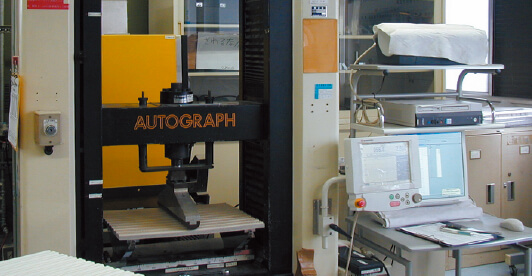
Verifies structural strength to guarantee the safety of buildings
-
Impact resistance test
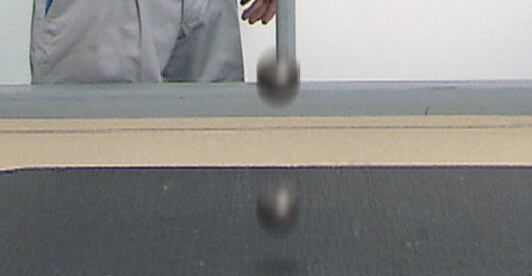
Evaluates resistance to collisions assumed in daily life and during natural disasters
-
Weathering test
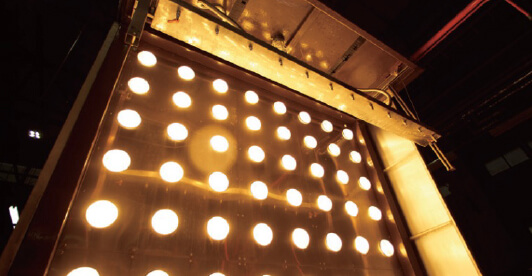
Assesses the weather resistance of exterior wall and roofing materials by irradiating infrared and ultraviolet light
-
Waterproof test
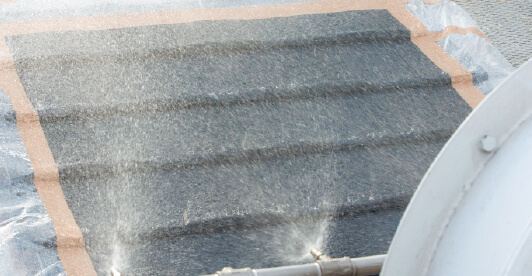
Inspection to ensure there is no water intrusion even under long rain and strong winds


Educating experts that deliver trusted Japanese quality worldwide
As a leading company in exterior building materials, KMEW adopts proven standard installation techniques and trains construction professionals. Many overseas installers have completed our training and are now delivering safe, reliable, high-quality exterior materials worldwide.